UCI Freshman Year · Fall 2018
NAZA Quadcopter Build
University of California, Irvine · Intro Engineering Project
First quarter of freshman year at UCI, and my team was handed a real engineering problem: design, fabricate, and fly a quadcopter from scratch. I stepped up to lead the team — coordinating fabrication, dividing up subsystems, and driving us toward a working prototype on a tight academic timeline.
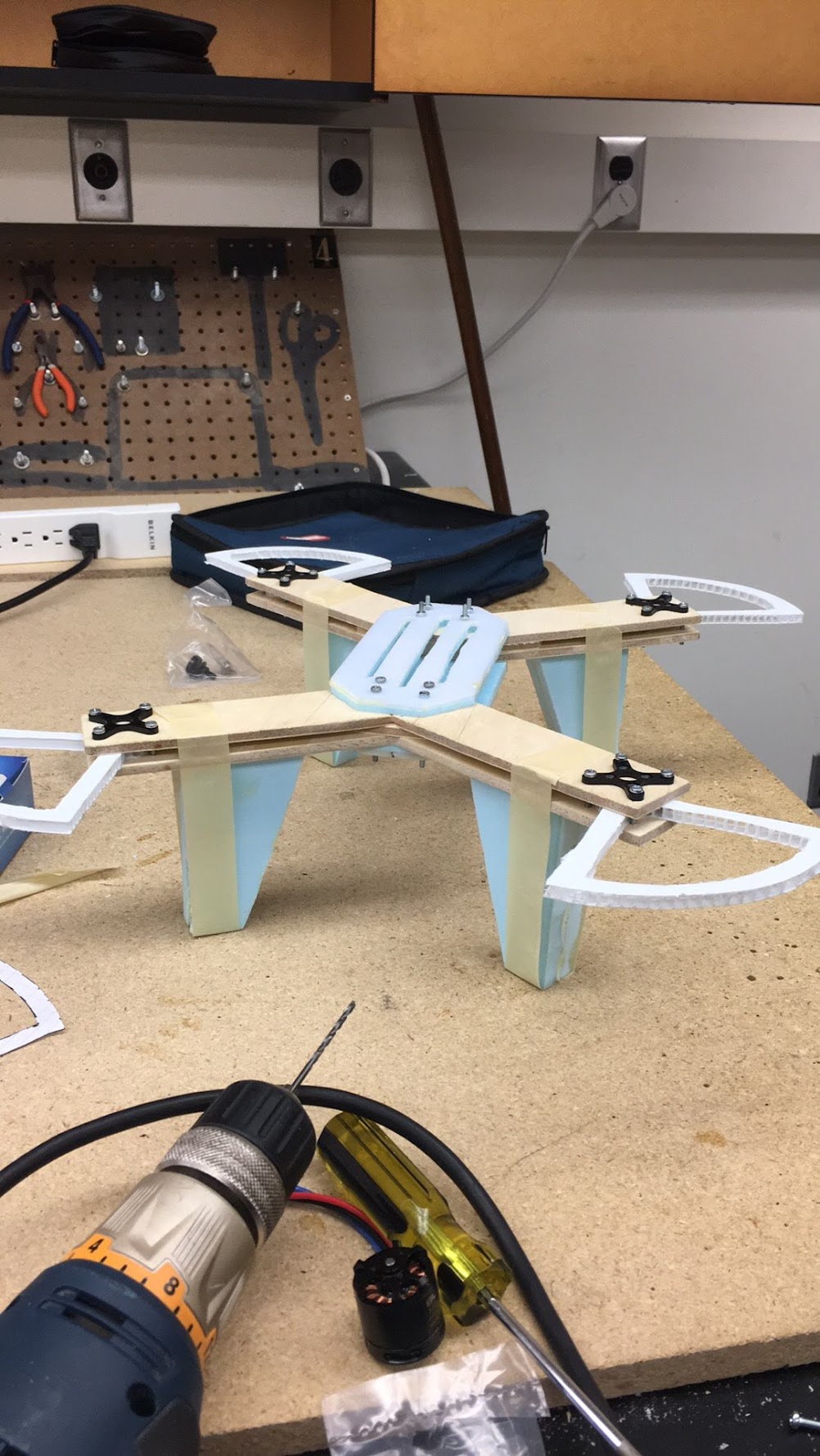
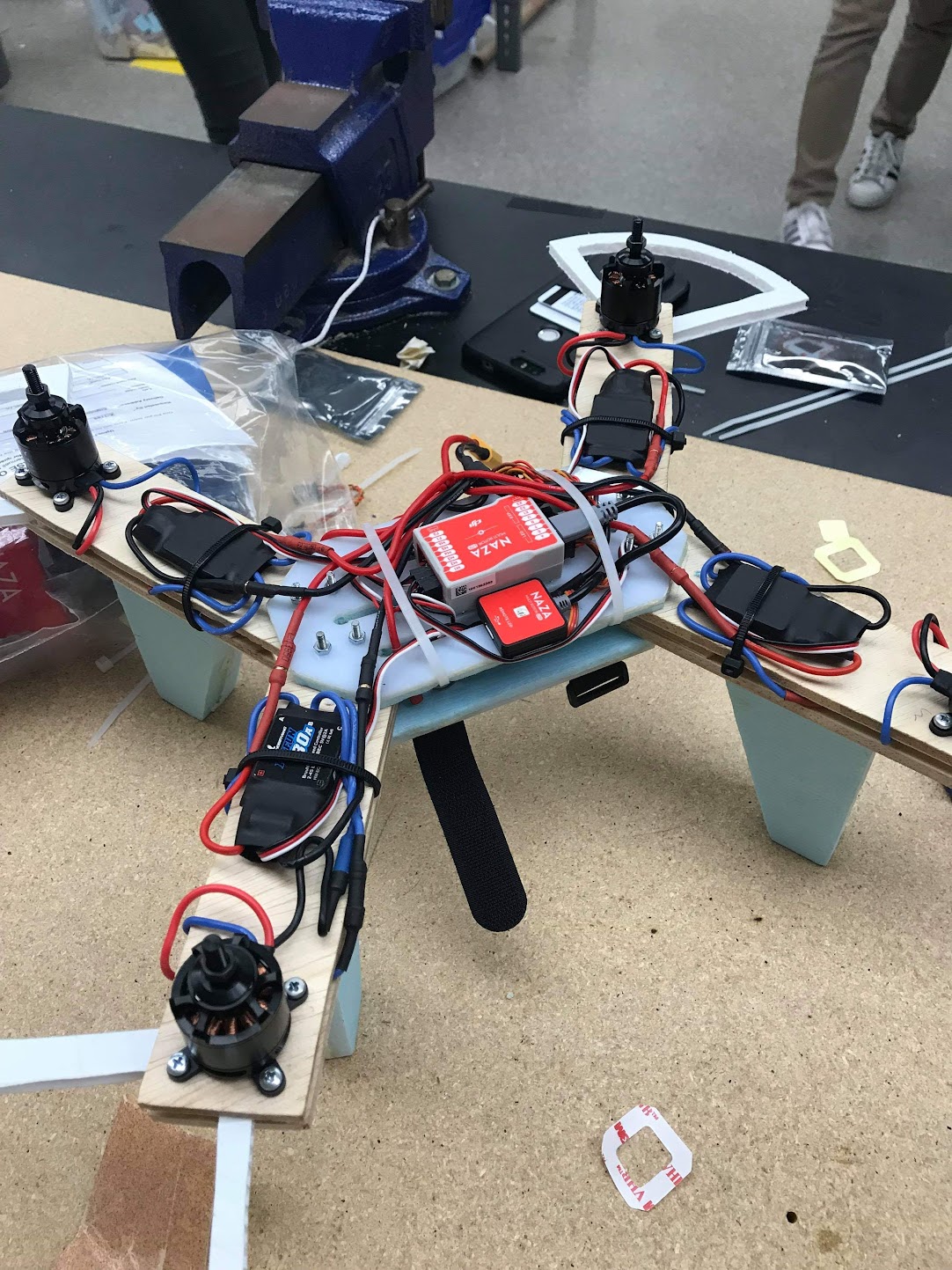
The frame came together from a mix of materials: wood brackets for the main body cross, stiff foam for landing pads to absorb touchdown loads, and plastic rotor guards beneath each motor arm. At the center of it all: the DJI NAZA flight controller, paired with four brushless motors and ESCs wired up by hand. Every connection mattered — one bad solder joint or miswired ESC and the whole thing becomes a pinwheel.
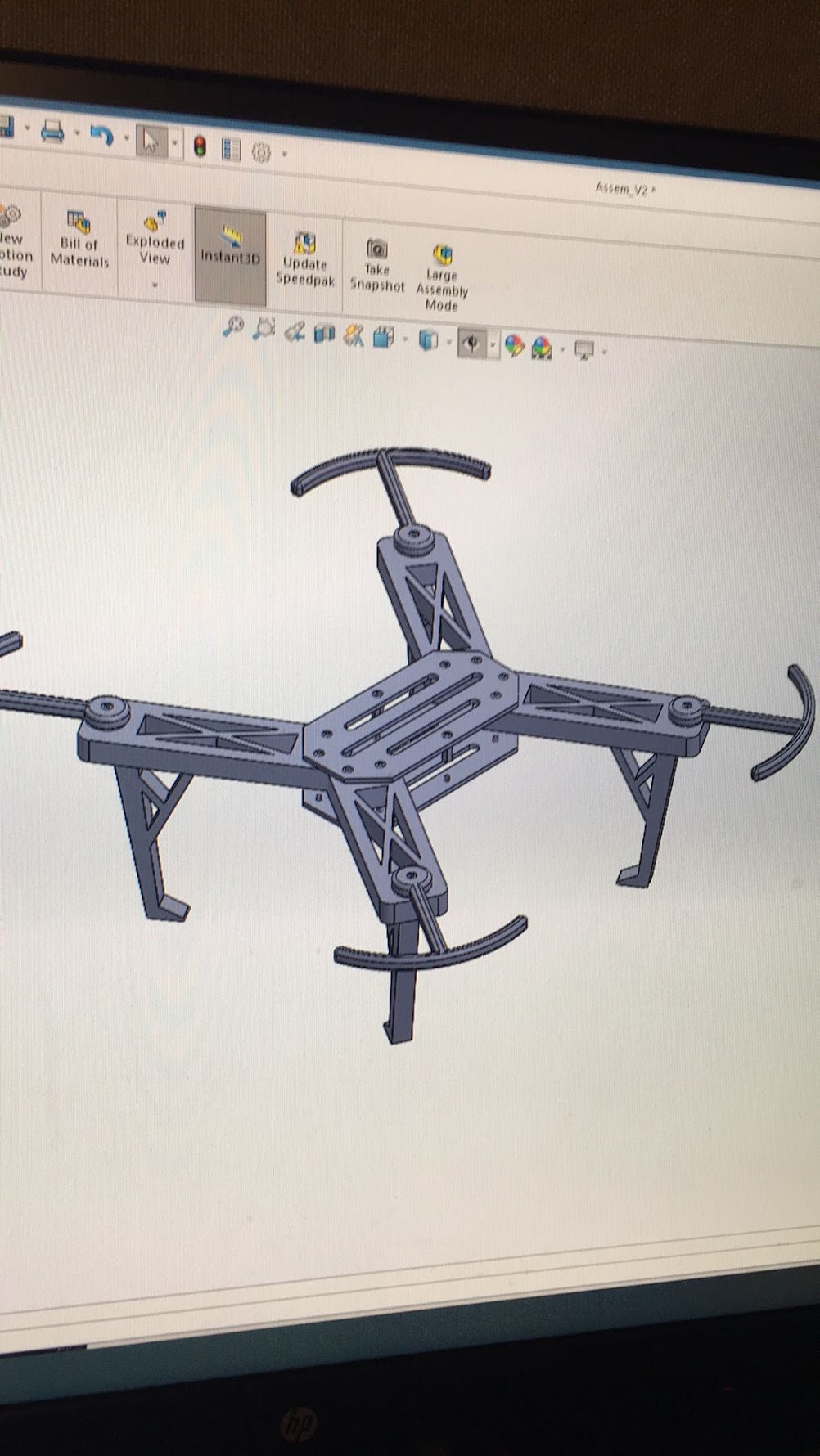
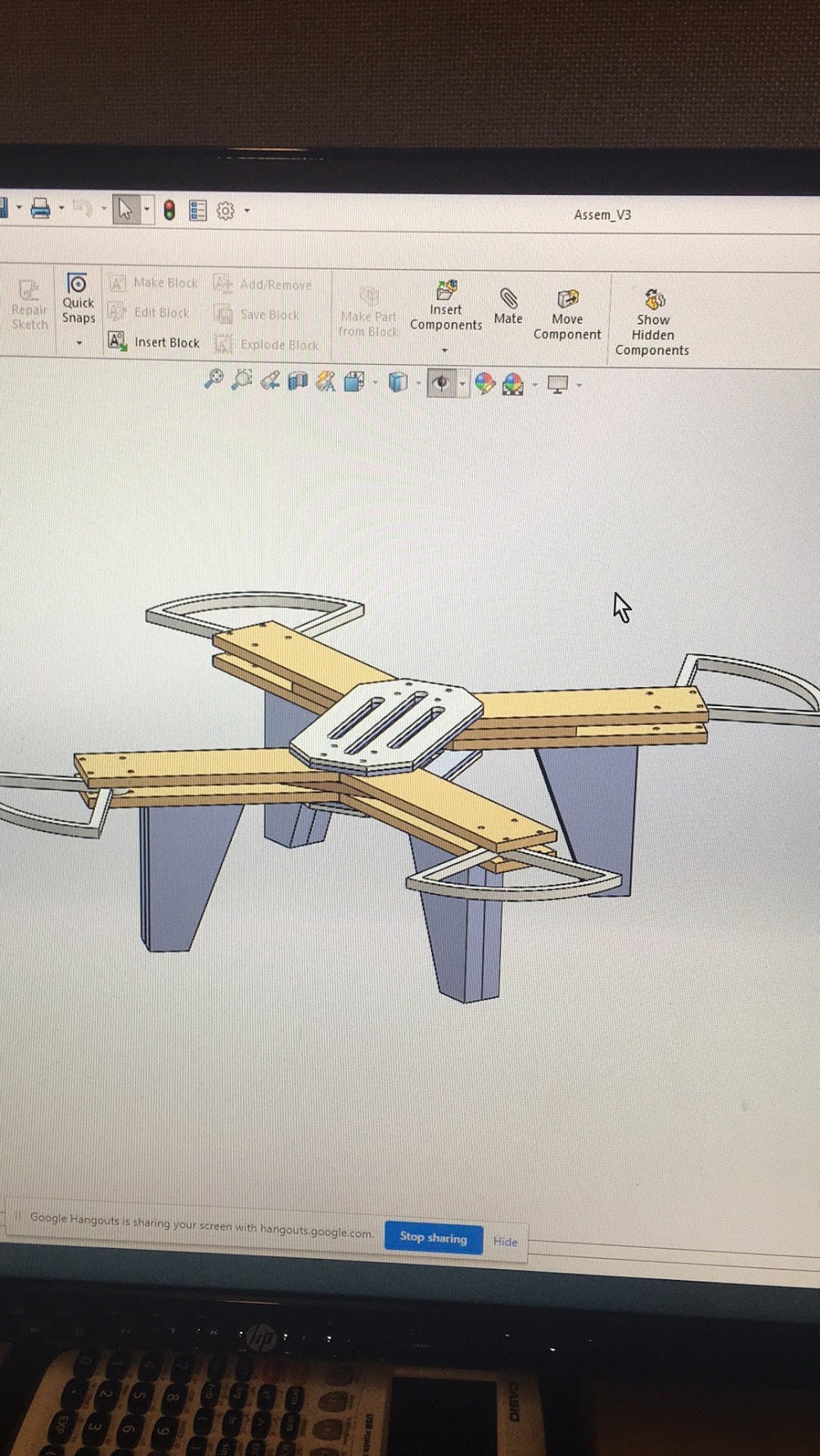
I leaned heavily on SolidWorks during the design phase, learning the tool properly for the first time. My dad — a senior mechanical engineer with years of SolidWorks experience — was a resource I didn't take for granted. I asked a lot of questions and picked up habits that stuck well beyond this project.
The end goal wasn't just a working drone — it was competition. A dedicated pilot (not me) had to fly the quad, touch down on two pads, and land back on the home pad as fast as possible. Three pads total — touch two, return home. Fastest time wins. That meant our build had to be stable, responsive, and reliable under pressure — not just functional on a workbench.
We also presented in front of engineering boards, assistants, and directors — walking through our design decisions, the challenges we hit along the way, and what we'd do differently if given another shot at it. That reflection piece stuck with me as much as the build itself.
First Test Run — Couldn't Lift Off
Competition Run — ~25 Seconds